What Are Whole Grains?
Whole grains are the edible seeds of certain plants. Unlike refined grains, which are milled to remove parts of the kernel, whole grains contain the entire grain kernel: the bran, germ, and endosperm. Each part contributes different nutrients. The bran is rich in fiber, B vitamins, iron, copper, zinc, magnesium, antioxidants, and phytochemicals. The germ is the core of the seed, packed with healthy fats, vitamin E, B vitamins, and antioxidants. The endosperm contains carbohydrates, protein, and small amounts of some B vitamins and minerals.
Common examples include whole wheat, oats, brown rice, quinoa, barley, and farro. When you choose whole-grain products, you get the full nutritional package that nature intended.
Sources: The Journal of Nutrition / American Society for Nutrition (PMC), Whole Grains Council / Tufts University, Kellogg's
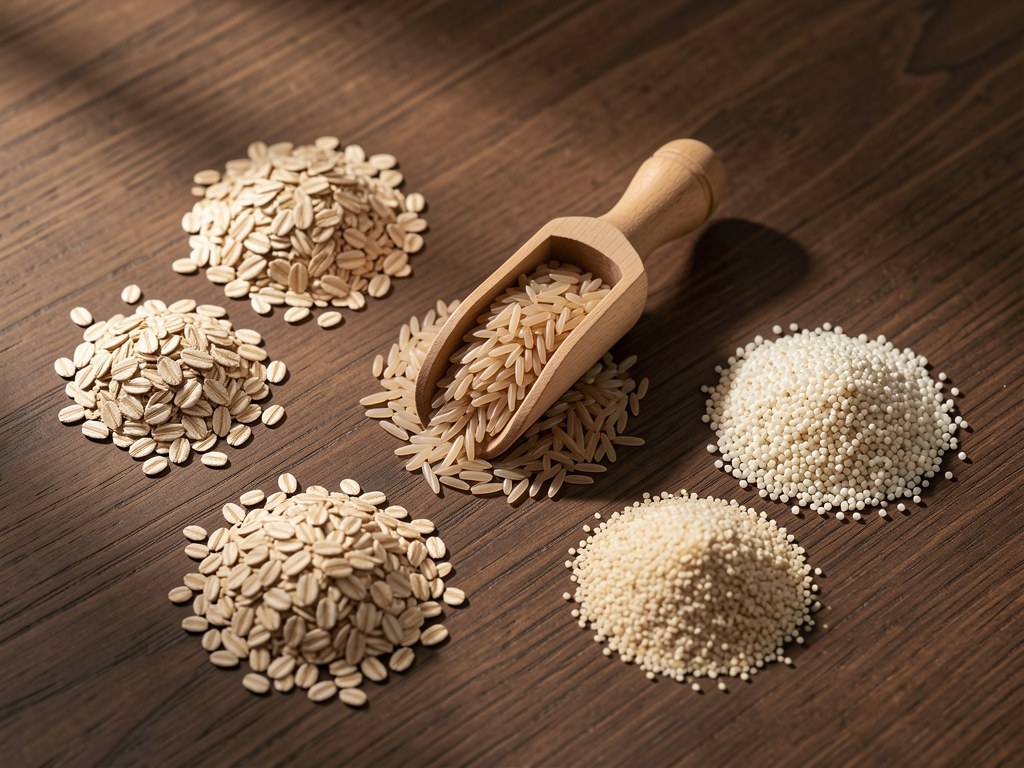
Whole Grains
Higher whole-grain intake is associated with lower risks of several chronic diseases. According to the scientific foundation for the 2025–2030 Dietary Guidelines for Americans, people who eat more whole grains have a 7% lower risk of all-cause mortality, 15% lower risk of cardiovascular disease, 13% lower risk of colorectal cancer, 15% lower risk of obesity, and 33% lower risk of type 2 diabetes. These are associations from observational studies and do not prove that whole grains cause these outcomes.
A dose-response analysis found significant risk reductions per 30 grams per day increase in whole grain consumption, ranging from a 6% reduction for all-cause mortality and colorectal cancer to a 24% reduction for type 2 diabetes.
Eating whole grains instead of refined grains substantially lowers total cholesterol, low-density lipoprotein (LDL) cholesterol, triglycerides, and insulin levels. Whole grains also provide fiber, which helps with digestion and satiety.
Sources: U.S. Department of Health and Human Services and U.S. Department of Agriculture, Harvard T.H. Chan School of Public Health
Top Whole Grains to Include
Many nutritious whole grains are widely available. You can rotate them to add variety and different nutrients to your diet. Popular options include:
- Whole wheat (including whole wheat flour and pasta)
- Oats (steel-cut, rolled, or old-fashioned)
- Brown rice
- Quinoa (actually a seed, but often used like a grain)
- Barley (hulled or pearled)
- Farro
- Bulgur
- Millet
- Sorghum
- Rye (whole rye or rye berries)
How Much Do You Need? Serving Size Guide
The 2025–2030 Dietary Guidelines for Americans set whole grains serving goals of 2–4 servings per day for a 2,000-calorie dietary pattern, adjusting as needed based on individual caloric requirements. Daily whole grain servings range from 1–2 for a 1,000-calorie pattern to 3¼–6½ for a 3,200-calorie pattern.
A serving of whole grains is one ounce-equivalent. Examples include ½ cup cooked oats, brown rice, barley, quinoa, or buckwheat; 1 slice of bread; or 1 tortilla.
Sources: U.S. Department of Health and Human Services and U.S. Department of Agriculture
Reading Food Labels: Whole Grain Claims
Food labels can be confusing. A product labeled “100% whole grain” means all the grain ingredients are whole grains. However, products labeled as “Made with Whole Grain” or “Multigrain” often contain mostly refined grains. Multigrain simply means the product contains several types of grains, but those grains may all be refined.
To identify whole grain products, look for the word “whole” before each grain in the ingredient list. The 2020–2025 Dietary Guidelines for Americans stated that the relative amount of whole grain in a food can be inferred by the placement of the grain in the ingredient list—the whole grain should be the first ingredient, or the second ingredient after water. However, labels like “multigrain” or “made with whole grain” can be misleading. Always check the ingredient list to ensure whole grains are the primary grain ingredient.
Sources: U.S. Department of Health and Human Services and U.S. Department of Agriculture, Whole Grains Council
Refined vs. Whole Grains: A Comparison
Understanding the difference between refined and whole grains is key to making healthier choices. The table below compares key attributes of whole grains, refined grains, and two forms of whole grains: whole wheat flour bread and intact whole grains like oats, barley, and brown rice.
| Attribute | Whole grains | Refined grains | Whole wheat flour bread | Intact whole grains (oats, barley, brown rice) |
|---|---|---|---|---|
| Processing | Contains the entire grain kernel — bran, germ, and endosperm — in the same relative proportions as the intact grain. | Milled to remove the bran and germ, leaving primarily the starchy endosperm. | Milled flour; less intact than whole grain kernels such as oats, barley, or brown rice. | Retain more fiber and nutrients because the grain kernel remains intact. |
| Fiber content | Contains approximately 80% more dietary fiber than refined grains. | Lower in dietary fiber; refining strips away virtually all of the fiber. | Not specified | Not specified |
| Nutrient content | Richer in dietary fiber, vitamins, minerals, and phytonutrients compared with refined grains. | Lower in vitamins, minerals, and phytonutrients; some nutrients may be added back through enrichment but fiber and phytonutrients are not restored. | Not specified | Not specified |
| Health benefits | Associated with lower risk of cardiovascular disease, type 2 diabetes, and some cancers; may improve cholesterol, triglycerides, and insulin levels. | Consumption of highly processed refined carbohydrates is associated with increased health risks; guidelines recommend reducing intake. | Glucose and insulin responses nearly identical to refined white bread in reviewed studies. | These intact forms appear to provide the strongest health benefits relative to milled whole wheat flour. |
| Glycemic response | Tends to have a lower glycemic index than refined grains. | Tends to have a higher glycemic index than whole grains. | Not specified | Not specified |
| Examples | Brown rice, barley, oats, quinoa, buckwheat, whole wheat, rye, millet, sorghum, teff, amaranth. | White bread, white rice, white flour, refined pasta, many packaged breakfast cereals. | Breads made with whole wheat flour. | Oats, barley, brown rice. |
Sources: U.S. Department of Health and Human Services and U.S. Department of Agriculture, Harvard T.H. Chan School of Public Health, The Journal of Nutrition / American Society for Nutrition (PMC), Kellogg's, Stephanie Kay Nutrition
Simple Swaps to Add More Whole Grains
Incorporating more whole grains into your diet is often a matter of simple substitutions. The 2025–2030 Dietary Guidelines for Americans recommend significantly reducing consumption of highly processed, refined carbohydrates such as white bread, ready-to-eat or packaged breakfast options, flour tortillas, and crackers. Here are some easy swaps:
- Pick brown rice over white rice.
- Use whole-wheat pasta or whole-grain pasta blends.
- Replace refined breakfast cereals with oatmeal or whole-grain cereals (choose those with less sugar).
- Use whole-wheat flour when baking, or mix whole-wheat with all-purpose flour.
- Snack on air-popped popcorn instead of chips.
- Try quinoa or bulgur as a base for salads or grain bowls.
Sources: U.S. Department of Health and Human Services and U.S. Department of Agriculture
Cooking Whole Grains: Tips
Cooking whole grains is simple, though some take longer than refined versions. Rinse grains like quinoa, millet, and farro before cooking to remove any bitterness. A rice cooker or instant pot can simplify the process. For general guidance, simmer grains in water or broth until tender; the exact time and water ratio vary by grain type. Let cooked grains rest for a few minutes off the heat, then fluff with a fork. Store cooked grains in the refrigerator for up to 5 days or freeze for later use.
Potential Cautions and Individual Needs
While whole grains are beneficial for most people, some may have specific dietary restrictions. For those with celiac disease or non-celiac gluten sensitivity, the gluten-free whole grains—such as brown rice, quinoa, millet, and sorghum—are safe alternatives. However, oats may be cross-contaminated with gluten during processing, so choose certified gluten-free oats if you are highly sensitive.
People with diabetes or prediabetes should monitor portions, as whole grains still contain carbohydrates. Individuals with certain chronic diseases may experience improved health outcomes when following a lower carbohydrate diet and should work with a health care professional to identify an appropriate diet.
Sources: U.S. Department of Health and Human Services and U.S. Department of Agriculture
Frequently asked questions
What does '100% whole grain' mean on a label?
A product labeled '100% whole grain' means that all the grain ingredients are whole grains. This is a reliable indicator that the product contains the entire grain kernel—bran, germ, and endosperm—and provides the associated nutrients and fiber. However, it doesn't guarantee the product is low in added sugar or sodium, so always check the Nutrition Facts label.
Sources: Whole Grains CouncilAre multigrain products the same as whole grain?
No. Multigrain simply means the product contains several types of grains, but those grains may all be refined. For example, a multigrain bread might contain white flour, enriched wheat flour, and cornmeal, none of which are whole. Look for the words 'whole' before each grain in the ingredient list.
Sources: U.S. Department of Health and Human Services and U.S. Department of AgricultureI'm gluten intolerant: which whole grains can I eat?
If you have celiac disease or gluten sensitivity, you can enjoy these gluten-free whole grains: brown rice, quinoa, millet, and sorghum. Be cautious with oats, as they may be cross-contaminated with gluten; choose oats that are certified gluten-free if you decide to include them.
Can I lose weight by eating whole grains?
Whole grains are rich in fiber, which helps you feel full and satisfied, potentially reducing overall calorie intake. Higher whole-grain intake is associated with a 15% lower risk of obesity in observational studies. However, this is an association, not proof that eating whole grains causes weight loss. Replacing refined grains with whole grains is a healthier choice that may support weight management, but total calorie intake still matters.
Sources: U.S. Department of Health and Human Services and U.S. Department of AgricultureSources
- Dietary Guidelines for Americans, 2025–2030 — U.S. Department of Health and Human Services and U.S. Department of Agriculture
- Scientific Foundation for the Dietary Guidelines for Americans, 2025–2030 — U.S. Department of Health and Human Services and U.S. Department of Agriculture
- The Scientific Foundation for the Dietary Guidelines for Americans, 2025–2030: Appendices — U.S. Department of Health and Human Services and U.S. Department of Agriculture
- Daily Servings by Calorie Level — U.S. Department of Health and Human Services and U.S. Department of Agriculture
- U.S. Dietary Guidelines and WG | The Whole Grains Council — Whole Grains Council
- Whole Grains • The Nutrition Source — Harvard T.H. Chan School of Public Health
- Putting the Whole Grain Puzzle Together: Health Benefits Associated with Whole Grains—Summary of American Society for Nutrition 2010 Satellite Symposium — The Journal of Nutrition / American Society for Nutrition (PMC)
- Health Benefits of Whole Grains and the Role of Intact Grains — Whole Grains Council / Tufts University
- Whole Grain VS Refined Grain: What's vital to health | Kelloggs IN — Kellogg's
- Whole Grains vs. Refined Grains: Which is Healthier? - Stephanie Kay Nutrition — Stephanie Kay Nutrition