Why Protein Matters in a Balanced Diet
Protein is a core building block of a balanced dietary pattern. The Dietary Guidelines for Americans 2025–2030 advise prioritizing high-quality, nutrient-dense protein foods as part of healthy eating. Protein foods also supply other nutrients that matter for everyday health, so the goal is not simply to eat more protein but to choose sources that fit your overall pattern.
Federal guidance recommends eating a variety of protein foods from both animal and plant sources. That includes eggs, poultry, seafood and red meat as well as beans, peas, lentils, legumes, nuts, seeds and soy. Variety matters because different protein foods bring different fats, vitamins and minerals to the plate.
- Protein foods help meet nutrient needs and are part of a balanced dietary pattern.
- Both animal and plant protein foods are included in federal guidance.
- Choosing a mix of sources supports a wider range of nutrients.
Sources: U.S. Department of Health and Human Services and U.S. Department of Agriculture
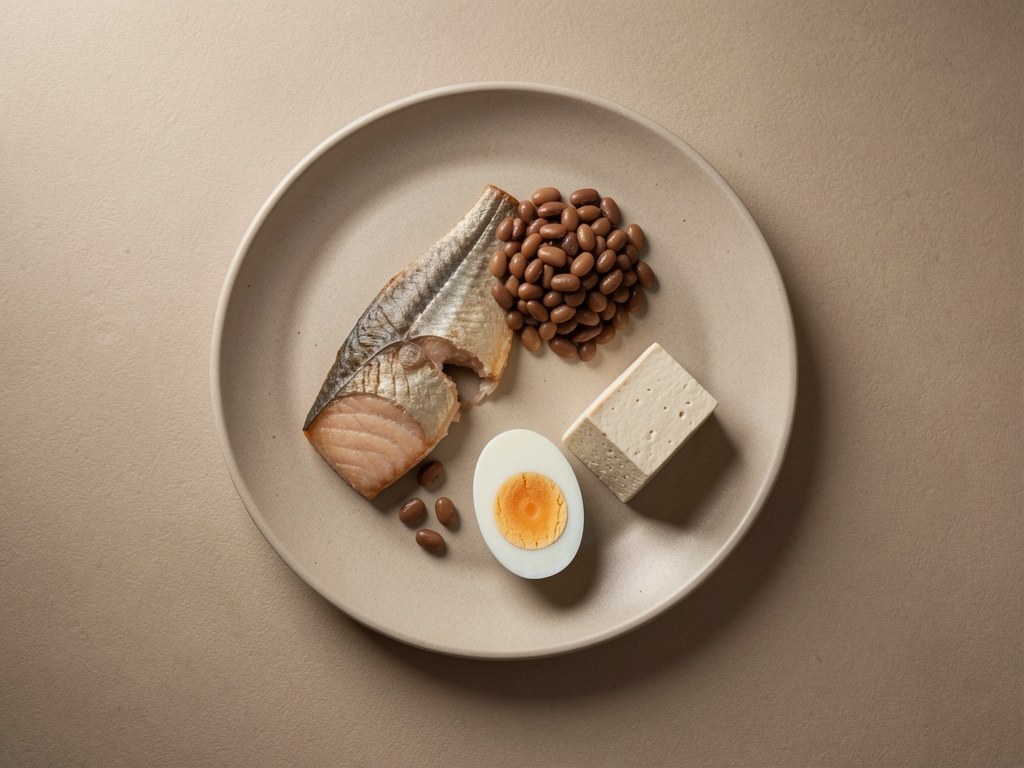
What Does 'Lean' Mean?
In everyday cooking, lean protein refers to protein foods that are relatively high in protein while contributing less fat, especially less saturated fat. The term is most often used for animal foods such as skinless poultry, fish, eggs and certain dairy products, but it also applies to many plant proteins that naturally contain little saturated fat.
Federal guidelines emphasize that how you cook protein matters too. The Dietary Guidelines for Americans 2025–2030 recommend swapping deep-fried cooking methods for baked, broiled, roasted, stir-fried or grilled methods. This simple change helps keep the overall fat profile of a meal closer to what a balanced pattern calls for.
- Lean means the protein food provides protein with less fat, especially saturated fat.
- Skinless chicken, fish, eggs and legumes are common examples.
- Baking, broiling, roasting, stir-frying or grilling are recommended over deep-frying.
Sources: U.S. Department of Health and Human Services and U.S. Department of Agriculture
Lean Animal Proteins: Chicken, Turkey, Fish, Eggs, Dairy
Animal proteins are complete proteins, meaning they provide all nine essential amino acids in sufficient quantities. Common lean choices include skinless chicken and turkey, fish such as omega-3-rich seafood, eggs, and dairy foods. These foods fit easily into a balanced plate when prepared with simple cooking methods.
Fish offers an additional advantage: omega-3-rich seafood is listed among the whole foods where healthy fats are plentiful. Eggs are also explicitly included in federal guidance among animal-source protein foods to eat as part of a varied diet. For poultry, removing the skin and using the cooking methods listed above keeps the preparation lean.
- Complete proteins from animal sources include meat, poultry, fish, eggs and dairy.
- Omega-3-rich seafood provides protein and healthy fats.
- For chicken and turkey, skip deep-frying and remove the skin when you want a leaner result.
| Protein food | Protein quality | Fat or nutrient note | Preparation tip |
|---|---|---|---|
| Skinless chicken breast | Complete protein | Described as high in protein and low in fat | Bake, broil, roast, stir-fry or grill instead of deep-frying |
| Omega-3-rich fish | Complete protein | Listed among foods with healthy fats | Bake, broil, roast, stir-fry or grill instead of deep-frying |
| Eggs | Complete protein | Included among animal-source protein foods in federal guidance | Prepare with little added fat, such as poaching or boiling |
Sources: U.S. Department of Health and Human Services and U.S. Department of Agriculture, Harvard T.H. Chan School of Public Health, The Nutrition Source, Brown University Health
Plant Proteins: Legumes, Tofu, Tempeh, Nuts, Seeds
Plant proteins are a valuable part of a balanced diet. Federal guidance explicitly includes beans, peas, lentils, legumes, nuts, seeds and soy among plant-sourced protein foods to eat as part of a varied diet. These foods also contribute fiber and a range of vitamins and minerals.
Most plant proteins are incomplete, meaning they lack one or more essential amino acids in sufficient quantities. Soybeans are an exception and are considered complete. People who avoid animal products may be at risk of low protein intake, so pairing complementary plant proteins—such as beans with rice—helps supply the full set of essential amino acids.
Nuts and seeds provide protein along with healthy fats, making them a useful addition to meals and snacks.
- Beans, peas, lentils, legumes, nuts, seeds and soy are all included in federal protein guidance.
- Soy products such as tofu and tempeh are complete proteins.
- Pair complementary plant proteins, such as beans and rice, to cover essential amino acids.
- Nuts and seeds provide protein along with healthy fats.
| Plant protein | Protein completeness | Additional contribution | How to use it |
|---|---|---|---|
| Legumes (beans, peas, lentils) | Generally incomplete; pair with complementary proteins | Fiber, vitamins and minerals | Add to soups, salads, grain bowls and tacos |
| Soy products (tofu, tempeh, edamame) | Complete protein | Versatile main protein for meatless meals | Cube and stir-fry tofu or slice tempeh into sandwiches |
| Nuts and seeds | Not complete proteins | Healthy fats and protein | Sprinkle on oatmeal, yogurt, salads or cooked vegetables |
Sources: U.S. Department of Health and Human Services and U.S. Department of Agriculture, Harvard T.H. Chan School of Public Health, The Nutrition Source, MedlinePlus / National Institutes of Health, Tisch Food Center, Teachers College, Columbia University
How Much Protein Do You Need?
Protein recommendations have shifted over time. Older guidance set the Recommended Dietary Allowance at 0.8 grams of protein per kilogram of body weight per day, with an adult RDA of 46 grams per day for females and 56 grams per day for males based on average weight. That table came from an earlier edition of the Dietary Guidelines and is useful as baseline context.
The Dietary Guidelines for Americans 2025–2030 raised the recommended protein intake to 1.2–1.6 grams per kilogram of body weight per day, adjusted as needed based on individual caloric requirements. The change was not included in the 2025 Dietary Guidelines Advisory Committee report, and some experts have raised questions about excessive intake.
Because protein needs are highly variable, wider ranges have been set by groups like the National Academy of Medicine, and needs are best determined by a healthcare provider or a registered dietitian. For a practical starting point, fill about one-fourth of your plate with protein and aim for roughly 3 ounces per meal if you are a healthy adult without unique metabolic needs. Three ounces is about the size of a deck of cards or the palm of your hand.
- Older RDA: 0.8 g of protein per kg of body weight per day (46 g/day for females, 56 g/day for males based on average weight).
- Newer guideline: 1.2–1.6 g of protein per kg of body weight per day, adjusted for caloric needs, though this increase is contested by some experts.
- Practical plate guide: about one-quarter of the plate from protein, roughly 3 ounces per meal for many healthy adults.
- Individual protein needs vary; consult a healthcare provider or registered dietitian for personalized targets.
Sources: U.S. Department of Health and Human Services and U.S. Department of Agriculture, Harvard T.H. Chan School of Public Health, The Nutrition Source, MedlinePlus / National Institutes of Health, Brown University Health
Healthy Fat Choices: Oils, Avocados, Nuts
Healthy fats are an important part of a balanced diet. Federal guidance identifies healthy fats as plentiful in whole foods such as meats, poultry, eggs, omega-3-rich seafood, nuts, seeds, full-fat dairy, olives and avocados. Avocados are a whole-food source of healthy fats that can be sliced into salads, mashed onto toast, or blended into smoothies for a creamy texture.
For cooking fats, the guidelines prioritize oils with essential fatty acids, such as olive oil. Harvard nutrition experts note that plant oils including olive oil, soybean oil and canola oil have been shown to lower LDL cholesterol and cardiovascular risk compared with animal fats such as butter or tropical fats such as coconut oil and palm oil.
Clinical dietitians recommend choosing unsaturated fats—the kind found in olive oil, avocados, nuts, seeds and fatty fish—to support heart health. They also note that the new federal guidelines highlight fat as important but do not distinguish between types of fats in the main text; the unsaturated-versus-saturated distinction comes from dietitians and long-standing evidence rather than from that document.
- Healthy fats are naturally present in whole foods such as nuts, seeds, avocados, olives, eggs and omega-3-rich seafood.
- Olive oil is prioritized as an oil with essential fatty acids for cooking and adding to meals.
- Choose unsaturated fats from olive oil, avocados, nuts, seeds and fatty fish for heart health.
Sources: U.S. Department of Health and Human Services and U.S. Department of Agriculture, Harvard T.H. Chan School of Public Health, The Nutrition Source, MedlinePlus / National Institutes of Health, Brown University Health
Fats to Limit: Saturated and Trans Fats
The Dietary Guidelines for Americans 2025–2030 state that saturated fat consumption should generally not exceed 10 percent of total daily calories. Significantly limiting highly processed foods helps meet this goal. The guidelines also note that more research is needed on which dietary fats best support long-term health.
Clinical dietitians likewise suggest aiming for less than 10 percent of daily calories from saturated fats and limiting sources such as fatty cuts of beef, butter and full-fat dairy. They recommend choosing unsaturated fats instead to support heart health.
The Dietary Guidelines do not set specific limits for trans fats, guidance on red meat frequency, or a maximum daily egg yolk intake for healthy adults. If you have a medical condition that affects your dietary fat or cholesterol needs, speak with a qualified professional for personalized advice.
- Saturated fat should generally not exceed 10 percent of total daily calories.
- Highly processed foods are a common source of saturated fat to limit.
- Dietitians recommend choosing unsaturated fats over saturated fats for heart health.
Sources: U.S. Department of Health and Human Services and U.S. Department of Agriculture, Harvard T.H. Chan School of Public Health, The Nutrition Source, MedlinePlus / National Institutes of Health
Simple Ideas to Combine Healthy Proteins and Fats
Combining lean proteins with healthy fats is a straightforward way to build balanced meals. The goal is to keep the protein lean and add fats from whole-food sources such as olive oil, avocado, nuts or seeds rather than from deep-frying or heavy sauces.
This is a practical illustration, not a formal prescription, and it can be adapted to your preferences.
- Breakfast: plain yogurt with berries, nuts and a drizzle of olive oil or nut butter.
- Lunch: grain bowl with chickpeas, roasted vegetables and avocado.
- Dinner: baked omega-3-rich fish with quinoa, steamed broccoli and a side salad with olive oil dressing.
- Snack: apple slices with a small handful of almonds or walnuts.
- Choose a lean protein: skinless chicken, fish, eggs, tofu, tempeh, beans or lentils.
- Cook it with a recommended method: bake, broil, roast, stir-fry or grill.
- Fill half the plate with vegetables and a quarter with whole grains.
- Add a healthy fat: a drizzle of olive oil, sliced avocado, or a sprinkle of nuts or seeds.
- Season with herbs, spices, citrus or vinegar instead of heavy sauces.
Sources: U.S. Department of Health and Human Services and U.S. Department of Agriculture, Harvard T.H. Chan School of Public Health, The Nutrition Source, MedlinePlus / National Institutes of Health, Brown University Health
Frequently asked questions
Is red meat ever okay to eat?
Yes. The Dietary Guidelines for Americans 2025–2030 recommend consuming a variety of protein foods from animal sources, including red meat, as part of a varied dietary pattern. If you choose red meat, apply the guideline advice on cooking methods: bake, broil, roast, stir-fry or grill instead of deep-frying, and keep saturated fat within the general limit of no more than 10 percent of daily calories.
Sources: U.S. Department of Health and Human Services and U.S. Department of AgricultureI'm vegetarian: how can I get enough protein?
Focus on plant protein foods included in federal guidance: beans, peas, lentils, legumes, nuts, seeds and soy. Most plant proteins are incomplete, so pair complementary sources—such as beans with rice—to obtain all essential amino acids. Soy products like tofu and tempeh are complete proteins. People who exclude animal products may be at risk of low protein intake, so it helps to include a protein source at each meal and to consult a qualified professional if you are unsure about your needs.
Sources: U.S. Department of Health and Human Services and U.S. Department of Agriculture, Harvard T.H. Chan School of Public Health, The Nutrition SourceWhat are examples of healthy fats?
Healthy fats are found in whole foods such as avocados, nuts, seeds, olive oil, fatty fish, eggs and full-fat dairy. For cooking and adding to meals, federal guidance prioritizes oils with essential fatty acids, such as olive oil.
Sources: U.S. Department of Health and Human Services and U.S. Department of AgricultureCan I eat egg yolks every day?
The Dietary Guidelines for Americans 2025–2030 include eggs among animal-source protein foods to consume as part of a varied diet, and eggs are also listed among whole foods where healthy fats are plentiful. The guidelines do not set a specific daily limit for egg yolks for healthy adults. If you have a medical condition that affects your dietary fat or cholesterol needs, speak with a qualified professional for personalized advice.
Sources: U.S. Department of Health and Human Services and U.S. Department of Agriculture, Harvard T.H. Chan School of Public Health, The Nutrition SourceSources
- [PDF] Dietary Guidelines for Americans, 2025–2030 - Eat Real Food — U.S. Department of Health and Human Services and U.S. Department of Agriculture
- Dietary Guidelines for Americans 2025-2030: Progress on added sugar, protein hype, saturated fat contradictions — Harvard T.H. Chan School of Public Health, The Nutrition Source
- Dietary Guidelines for Americans 2025 - 2030 — MedlinePlus / National Institutes of Health
- The 2025-2030 Dietary Guidelines and Heart Health: What to Know | Brown University Health — Brown University Health
- The 2025-2030 Dietary Guidelines for Americans: Let’s digest this! | 2025 | Blog | Tisch Food Center | Teachers College, Columbia University — Tisch Food Center, Teachers College, Columbia University