Why Your Body Needs Fat
Dietary fat is a core nutrient, not a discretionary extra. According to the Mayo Clinic, fats help the body absorb important nutrients and provide energy, and they are involved in hormone production and in how the body's cells are made and work. Two fatty acids must come from the diet because the body cannot make them: the omega-6 linoleic acid and the omega-3 alpha-linolenic acid (ALA). Walnuts, flaxseed, chia seed and soybean products are among the foods that supply these essential fats.
The practical challenge is not whether to eat fat but which fats to choose and how much. Current U.S. guidance retains a longstanding cap: saturated fat should not exceed 10% of total daily calories. On a 2,000-calorie diet, that equals roughly 22 grams of saturated fat per day. For people with risk factors for heart disease, the American Heart Association suggests less than 6% of total calories from saturated fat. Some experts suggest that in a healthy diet, no more than about 30% of calories should come from fat. These are population-level reference points, not personalized prescriptions; individual needs vary by age, sex, activity level, pregnancy or breastfeeding status, and health conditions.
- Fat helps absorb important nutrients and supplies energy.
- Fat is involved in hormone production and in how cells are made and work.
- Linoleic acid (omega-6) and alpha-linolenic acid (omega-3) are essential—they must come from food.
- Saturated fat should stay under 10% of daily calories for most people; less than 6% is suggested for those with heart disease risk factors.
- Some experts suggest keeping total fat at or below about 30% of calories.
Sources: Mayo Clinic, Harvard T.H. Chan School of Public Health, The Nutrition Source
Saturated vs. Unsaturated Fats Explained
Fats are classified by their chemical structure, and that structure influences how they affect blood cholesterol. Unsaturated fats include monounsaturated and polyunsaturated types. Polyunsaturated fats include the omega-3 and omega-6 fatty acids. Saturated fats are found mainly in animal products and in tropical oils. Choosing unsaturated fats in place of saturated fats can improve blood cholesterol, which may lower the risk of heart disease.
Harvard's analysis of the 2025-2030 Dietary Guidelines for Americans notes a contradiction in the 'healthy fat' guidance: it groups animal-based foods higher in saturated fat, such as meats and full-fat dairy, together with plant-based foods lower in saturated fat, without specifying which should be chosen more or less often to stay within the saturated-fat upper limit. In practice, that means the 10% cap still matters, and the specific foods you pick within each category determine whether you stay under it. Diets focused on plant foods, where unsaturated fats are more common than saturated fats, tend to be linked to lower risk of heart disease, diabetes, obesity and some cancers, though diet and lifestyle factors beyond fat also play a role.
- Unsaturated fats: monounsaturated and polyunsaturated; polyunsaturated includes omega-3 and omega-6.
- Saturated fats: concentrated in lard, beef tallow, meat, whole milk, butter, some cheeses and yogurts, and coconut and palm oils.
- Unsaturated-fat sources include olive, canola and peanut oils; avocados; nuts such as almonds and pecans; seeds such as sesame and pumpkin; and fatty fish such as salmon and sardines.
- Trans fats occur naturally in meat and dairy from grazing animals, but most trans fats in food come from partially hydrogenating plant oils to make them semisolid.
Sources: Mayo Clinic, Harvard T.H. Chan School of Public Health, The Nutrition Source
Best Sources of Healthy Fats
The most reliable healthy fats choices are foods rich in unsaturated fats. Extra-virgin olive oil is a familiar example: it contains mostly oleic acid, a monounsaturated fat. Dr. Frank Hu of Harvard notes that olive oil has relatively small amounts of essential fatty acids such as alpha-linolenic acid and linoleic acid compared with oils such as soybean oil and canola oil. Soybean and canola oils are richer sources of those polyunsaturated essential fats. All plant oils—including olive, soybean and canola—have been shown to lower LDL cholesterol and cardiovascular risk compared with animal fats such as butter or tropical fats such as coconut oil and palm oil.
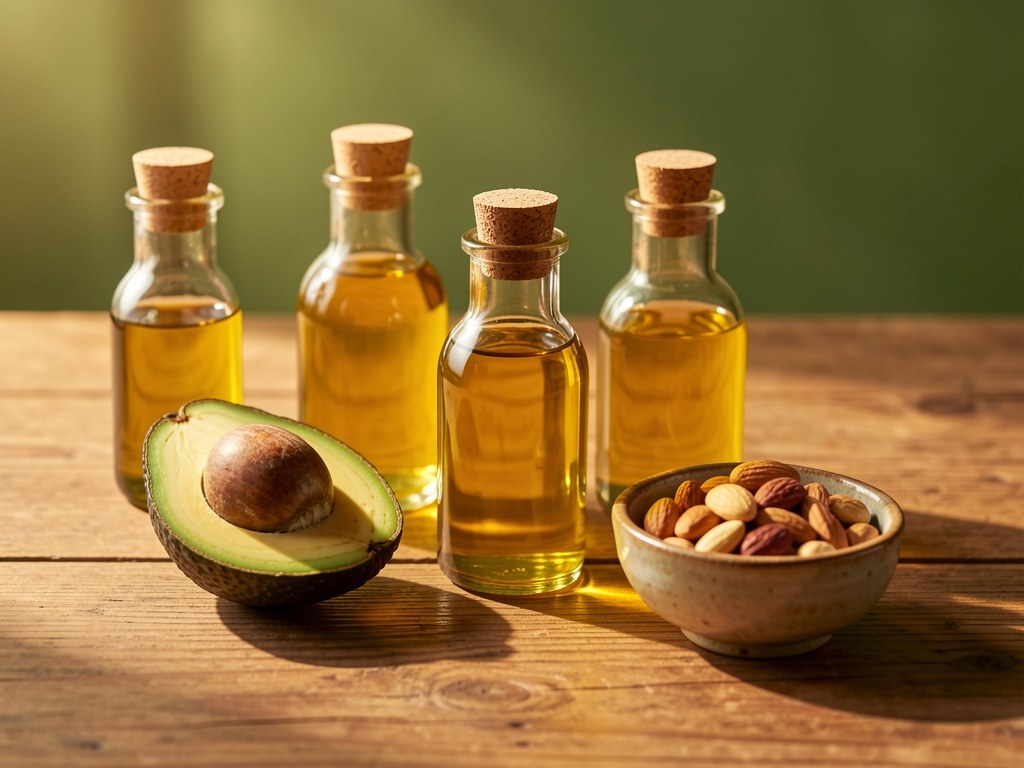
Beyond oils, whole foods supply healthy fats along with other nutrients. Avocados, nuts such as almonds and pecans, seeds such as sesame and pumpkin seeds, and fatty fish such as salmon and sardines are all listed by the Mayo Clinic as sources of unsaturated fats. Walnuts, flaxseed, chia seed and soybean products provide the essential fatty acids linoleic acid and alpha-linolenic acid. A reasonable approach is to build meals around these foods rather than treating fat as a separate add-on.
- Extra-virgin olive oil: mostly monounsaturated oleic acid; useful for replacing butter or lard.
- Soybean and canola oils: rich in the polyunsaturated essential fats ALA and linoleic acid.
- Avocados, almonds, pecans, sesame seeds and pumpkin seeds: whole-food unsaturated-fat sources.
- Salmon and sardines: fatty fish that supply unsaturated fats.
- Walnuts, flaxseed, chia seed and soybean products: sources of essential fatty acids.
Sources: Mayo Clinic, Harvard T.H. Chan School of Public Health, The Nutrition Source
Fats and Oils to Limit or Avoid
The fats to limit are those high in saturated fat and those containing industrial trans fats. Saturated fat is concentrated in lard, beef tallow, meat, dairy foods such as whole milk, butter, some cheese and yogurts, and coconut and palm oils. For people with risk factors for heart disease, the American Heart Association suggests less than 6% of total calories from saturated fat. Harvard's analysis illustrates how quickly full-fat dairy can consume the daily limit: at calorie levels cited by Harvard, the 2025-2030 Dietary Guidelines recommend 3 servings of dairy daily, and choosing full-fat options for the guidelines' own examples (8 oz whole milk, 3/4 cup full-fat Greek yogurt, 1 oz cheddar cheese) already reaches 17 grams of saturated fat.
Trans fats deserve special attention. In the United States, trans fats cannot be used in food production; food makers in other countries may still use this ingredient. That regulatory status applies to the U.S. jurisdiction and should not be assumed elsewhere. When reading ingredient lists, items with 'partially' in the name—such as partially hydrogenated palm oil or partially hydrogenated sunflower oil—likely contribute trans fats to the product. Seed Oil Free Certified also reports that the 2025-2030 Dietary Guidelines advise swapping deep-fried cooking methods for baked, broiled, roasted, stir-fried or grilled methods.
- Limit lard, beef tallow, fatty meats, butter, whole milk and some cheeses and yogurts.
- Limit coconut oil and palm oil; these tropical oils are high in saturated fat.
- Avoid products whose ingredient list includes partially hydrogenated oils.
- In the U.S., trans fats cannot be used in food production; other countries may still permit them.
- Prefer baked, broiled, roasted, stir-fried or grilled methods over deep-frying.
Sources: Mayo Clinic, Harvard T.H. Chan School of Public Health, The Nutrition Source, Seed Oil Free Certified (Seed Oil Free Alliance)
How to Read Food Labels for Fat Content
In the United States, the Nutrition Facts panel lists total fat per serving and, beneath it, amounts for saturated fat and trans fat even if the amount is zero. That layout makes it possible to compare products at a glance. Mayo Clinic offers a practical target: for saturated fat, aim for less than 2 grams per serving. The serving-size illustration matters—this figure and the 17-grams-from-three-dairy-servings calculation depend on specific serving sizes and calorie levels, so treat them as examples rather than universal prescriptions.
Ingredient lists are the second checkpoint. Items with 'partially' in the name, such as partially hydrogenated palm oil or partially hydrogenated sunflower oil, likely contribute trans fats to the product. Even when the Nutrition Facts panel shows zero grams of trans fat, the ingredient list can reveal partially hydrogenated oils below the rounding threshold. Foods processed to remove fat can be healthy, but products with fat removed may have added sugars, and such products have not been shown to help with weight, blood glucose management, or overall heart health. Checking both the panel and the ingredient list gives a fuller picture.
- Check total fat, saturated fat and trans fat on the Nutrition Facts panel.
- Aim for less than 2 grams of saturated fat per serving.
- Scan the ingredient list for the word 'partially'—it signals likely trans fats.
- Fat-free or low-fat processed products may contain added sugars.
- Compare similar products per serving, not per package.
Sources: Mayo Clinic
Healthy Cooking with Oils
Different cooking methods call for different fats. For everyday sautéing, roasting and dressing, plant oils such as extra-virgin olive oil, canola oil and soybean oil are versatile choices that have been shown to lower LDL cholesterol and cardiovascular risk compared with butter or tropical fats. Mayo Clinic recommends using plant-based oils such as extra-virgin olive oil in place of butter or lard as part of replacing saturated fats with unsaturated fats. The 2025-2030 Dietary Guidelines advise swapping deep-frying for baked, broiled, roasted, stir-fried or grilled methods, as reported by Seed Oil Free Certified.
For high-heat cooking, the picture is less settled. The Scientific Foundation for the 2025-2030 Dietary Guidelines review states that cooking or frying with linoleic-acid-rich oils produces much larger amounts of lipid hydroperoxides and aldehydes than oleic-acid or saturated-fat-containing oils and fats, according to Seed Oil Free Certified. That same source reports that the Scientific Foundation lists avocado oil among peroxidation-resistant cooking oil options. However, Seed Oil Free Certified also reports widespread adulteration of avocado oil with cheaper refined seed oils, and cites UC Davis research finding that many private-label avocado oils were rancid or mixed with other oils. These reports come from a certification body with a commercial interest in seed-oil-free products and are self-reported testing; they are not independent peer-reviewed evidence. A conservative approach is to use oils suited to the temperature you need, avoid overheating any fat, and favor cooking methods that do not require deep-frying.
- Use plant oils such as olive, canola and soybean for everyday cooking and dressings.
- Replace butter or lard with plant-based oils where possible.
- Choose baked, broiled, roasted, stir-fried or grilled methods over deep-frying.
- For high-heat cooking, evidence on oil oxidation is mixed; avoid overheating any oil.
- Avocado oil is reported as peroxidation-resistant, but purity concerns have been raised by a certification body.
| Fat or oil | Saturated fat (per tablespoon, where supported) | Main fatty acid profile | Effect on LDL cholesterol and cardiovascular risk compared with other fats | Suggested use |
|---|---|---|---|---|
| Extra-virgin olive oil | 2 grams | Mostly oleic acid (monounsaturated); relatively small amounts of essential fatty acids compared with soybean and canola oils | Shown to lower LDL cholesterol and cardiovascular risk compared with butter or coconut and palm oils | Can replace butter or lard; useful for sautéing, roasting and dressings |
| Butter | 7 grams | Animal fat high in saturated fat | Plant oils have been shown to lower LDL cholesterol and cardiovascular risk compared with butter | Use sparingly; replace with plant oils where possible |
| Beef tallow | 6 grams | Animal fat high in saturated fat; solid at room temperature | Plant oils have been shown to lower LDL cholesterol and cardiovascular risk compared with animal fats such as tallow | Limit; choose plant oils instead |
| Coconut oil and palm oil | Tropical oils high in saturated fat | Plant oils such as olive, soybean and canola have been shown to lower LDL cholesterol and cardiovascular risk compared with coconut and palm oils | Limit; choose plant oils instead | |
| Soybean oil | Rich in essential fatty acids including alpha-linolenic acid and linoleic acid (polyunsaturated) | Shown to lower LDL cholesterol and cardiovascular risk compared with butter or coconut and palm oils | Use for everyday cooking and dressings | |
| Canola oil | Rich in essential fatty acids including alpha-linolenic acid and linoleic acid (polyunsaturated) | Shown to lower LDL cholesterol and cardiovascular risk compared with butter or coconut and palm oils | Use for everyday cooking and dressings | |
| Avocado oil | Listed among peroxidation-resistant cooking oil options according to a secondary report; purity concerns have been raised |
Sources: Mayo Clinic, Harvard T.H. Chan School of Public Health, The Nutrition Source, Seed Oil Free Certified (Seed Oil Free Alliance)
Common Myths About Dietary Fat
Myth: Eating fat makes you fat. Diets focused on plant foods, where unsaturated fats are more common, tend to be linked to lower risk of heart disease, diabetes, obesity and some cancers, though diet and lifestyle factors beyond fat also play a role.
Myth: Coconut oil is a health food. The evidence categorizes coconut oil as high in saturated fat and compares it unfavorably to plant oils for LDL cholesterol. Dr. Frank Hu of Harvard stated that all plant oils, including olive, soybean and canola, have been shown to lower LDL cholesterol and cardiovascular risk compared with animal fats such as butter or tropical fats such as coconut oil and palm oil.
Myth: All saturated fat is equally harmful, or equally harmless. The Scientific Foundation for the 2025-2030 Dietary Guidelines review states that within typical intake ranges, saturated fat appears neither uniquely harmful nor protective, according to Seed Oil Free Certified. At the same time, the 10% cap on saturated fat remains in the Dietary Guidelines. The most consistent reading is that the overall dietary pattern—and what you choose instead of saturated fat—matters more than any single food. Replacing saturated fat with unsaturated fats from plant oils, nuts, seeds, avocados and fatty fish is supported by the Mayo Clinic and Harvard sources.
Myth: Low-fat and fat-free products are always healthier. Products with fat removed can be healthy, but foods processed to remove fat may have added sugars, and such products have not been shown to help with weight, blood glucose management, or overall heart health.
- Fat type and overall diet pattern matter more than any single food.
- Coconut oil is high in saturated fat; plant oils compare more favorably for LDL cholesterol.
- Within typical intake ranges, saturated fat is neither uniquely harmful nor protective per the DGA scientific review.
- Fat-free processed products may contain added sugars and have not been shown to improve weight or heart health.
Sources: Mayo Clinic, Harvard T.H. Chan School of Public Health, The Nutrition Source, Seed Oil Free Certified (Seed Oil Free Alliance)
Frequently asked questions
Is coconut oil healthy?
Coconut oil is high in saturated fat and is categorized alongside palm oil as a tropical oil to limit. Dr. Frank Hu of Harvard stated that plant oils including olive, soybean and canola have been shown to lower LDL cholesterol and cardiovascular risk compared with tropical fats such as coconut oil and palm oil.
Sources: Mayo Clinic, Harvard T.H. Chan School of Public Health, The Nutrition SourceCan I eat butter?
Butter is an animal fat high in saturated fat—about 7 grams per tablespoon. Mayo Clinic recommends replacing butter or lard with plant-based oils such as extra-virgin olive oil as part of replacing saturated fats with unsaturated fats. Plant oils have been shown to lower LDL cholesterol and cardiovascular risk compared with butter. If you enjoy butter, the practical approach is to use it sparingly and keep total saturated fat under 10% of daily calories.
Sources: Mayo Clinic, Harvard T.H. Chan School of Public Health, The Nutrition SourceWhat is the difference between olive oil and extra virgin olive oil?
Extra-virgin olive oil is specifically mentioned by Mayo Clinic as a plant-based oil that can replace butter or lard, and it is the form most often recommended for its flavor and minimal processing. Harvard notes that olive oil contains mostly oleic acid, a monounsaturated fat, but relatively small amounts of essential fatty acids such as alpha-linolenic acid and linoleic acid compared with soybean and canola oils.
Sources: Mayo Clinic, Harvard T.H. Chan School of Public Health, The Nutrition SourceHow much fat per day should I aim for?
Mayo Clinic reports that some experts suggest no more than about 30% of calories from fat, but this is not a unified guideline. For saturated fat specifically, the 2025-2030 Dietary Guidelines for Americans recommend keeping it under 10% of total daily calories—roughly 22 grams on a 2,000-calorie diet—and the American Heart Association suggests less than 6% for people with heart disease risk factors. Individual needs vary; a healthcare provider can help personalize these numbers.
Sources: Mayo Clinic, Harvard T.H. Chan School of Public Health, The Nutrition SourceAre avocados fattening?
Avocados are listed by the Mayo Clinic as a source of unsaturated fats, which are the fats to favor in place of saturated fats. Diets focused on plant foods, where unsaturated fats are more common, tend to be linked to lower risk of heart disease, diabetes, obesity and some cancers, though diet and lifestyle factors beyond fat also play a role. Whether avocados contribute to weight gain depends on overall calorie balance and the rest of your diet.
Sources: Mayo ClinicSources
- Dietary fat: Know which to choose — Mayo Clinic
- Dietary Guidelines for Americans 2025-2030: Progress on added sugar, protein hype, saturated fat contradictions — Harvard T.H. Chan School of Public Health, The Nutrition Source
- New Dietary Guidelines Rethink Fats - Seed Oil Free Alliance — Seed Oil Free Certified (Seed Oil Free Alliance)